Trips 2.0: a real-time dispatch dashboard
I took Trips 2.0 from field research to shipped components for a jet-fuel marketplace, and average dispatch time dropped 60%.
- Role
- Sole UX owner. Research, flows, interface design, and shipped front-end components.
- Timeline
- 2024-2026
- Team
- Engineers, product owner, ops contacts
- Stack
- Figma, Blazor WebAssembly (.NET 9), Razor, Radzen.Blazor, Material Design, Claude Code
- Users
- Fixed-Base Operators, Dispatchers, Pilot, and Fleet Managers
- Result
- Average dispatch time down 60%
Problem
FuelerLinx is corporate aviation's largest jet-fuel marketplace: $3.2B+ in annual transactions, 120,000+ monthly dispatches, and 5,000+ aircraft. A trip has legs, fuel needs, vendors, and costs attached.
The people managing trips do it under time pressure, often several at once.
Dispatchers were juggling paper logs, spreadsheets, and a legacy web app that hadn't been redesigned in years. Trip information was scattered across all three, and no single view was trusted as the source of truth.
There was no real-time visibility. Trip status lived in people's heads instead of in the system, and errors built up during shift handoffs.
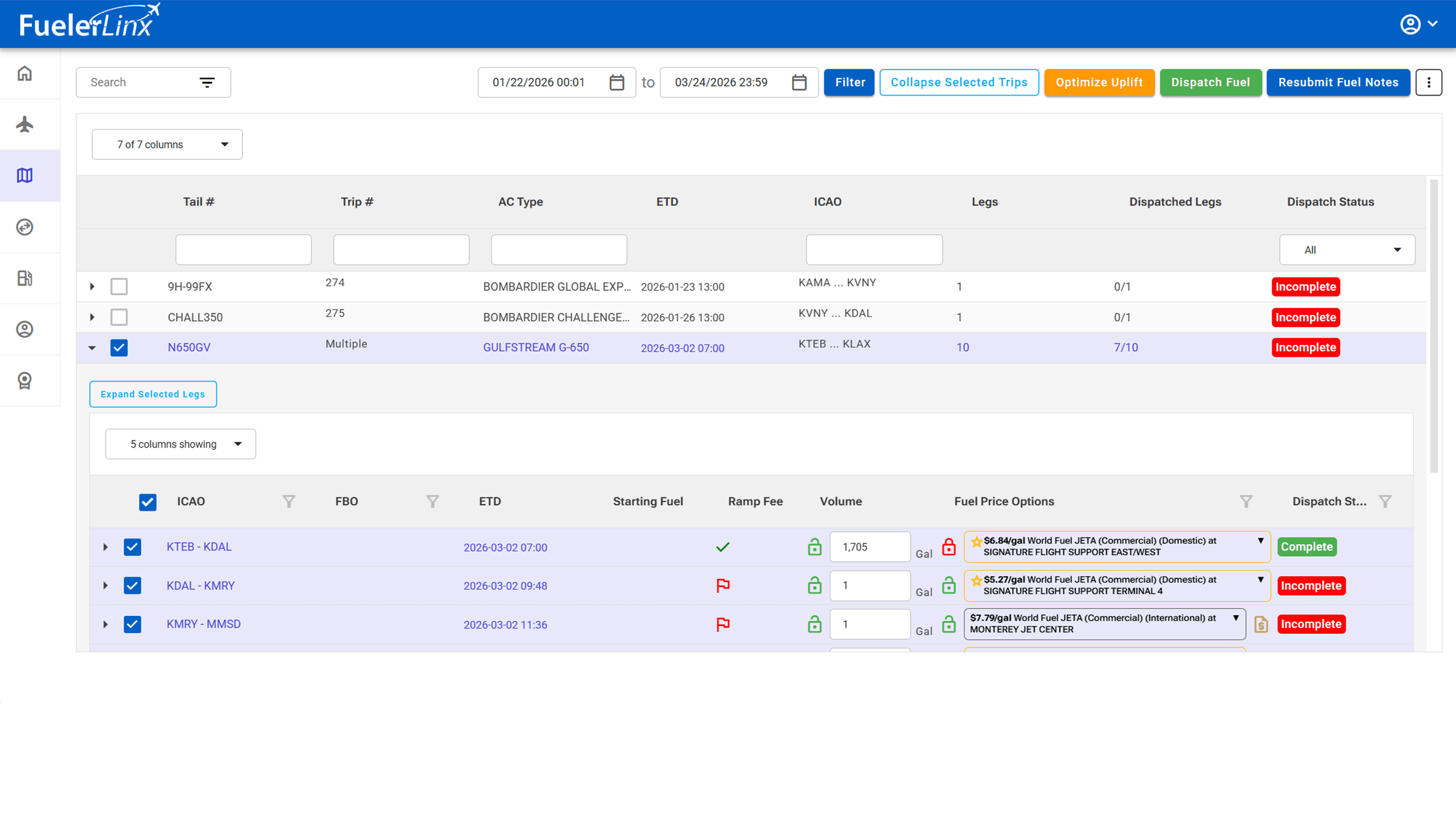
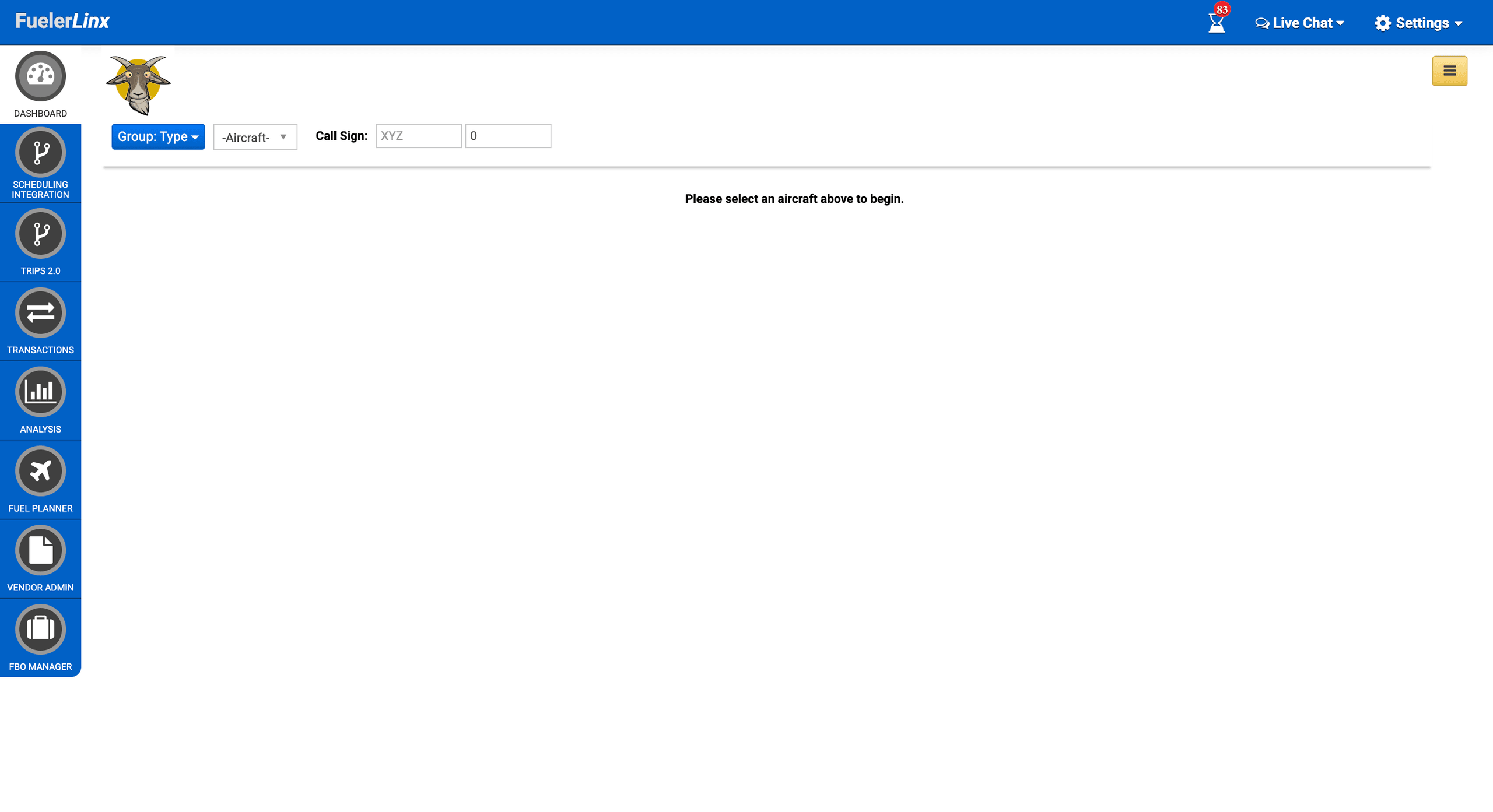
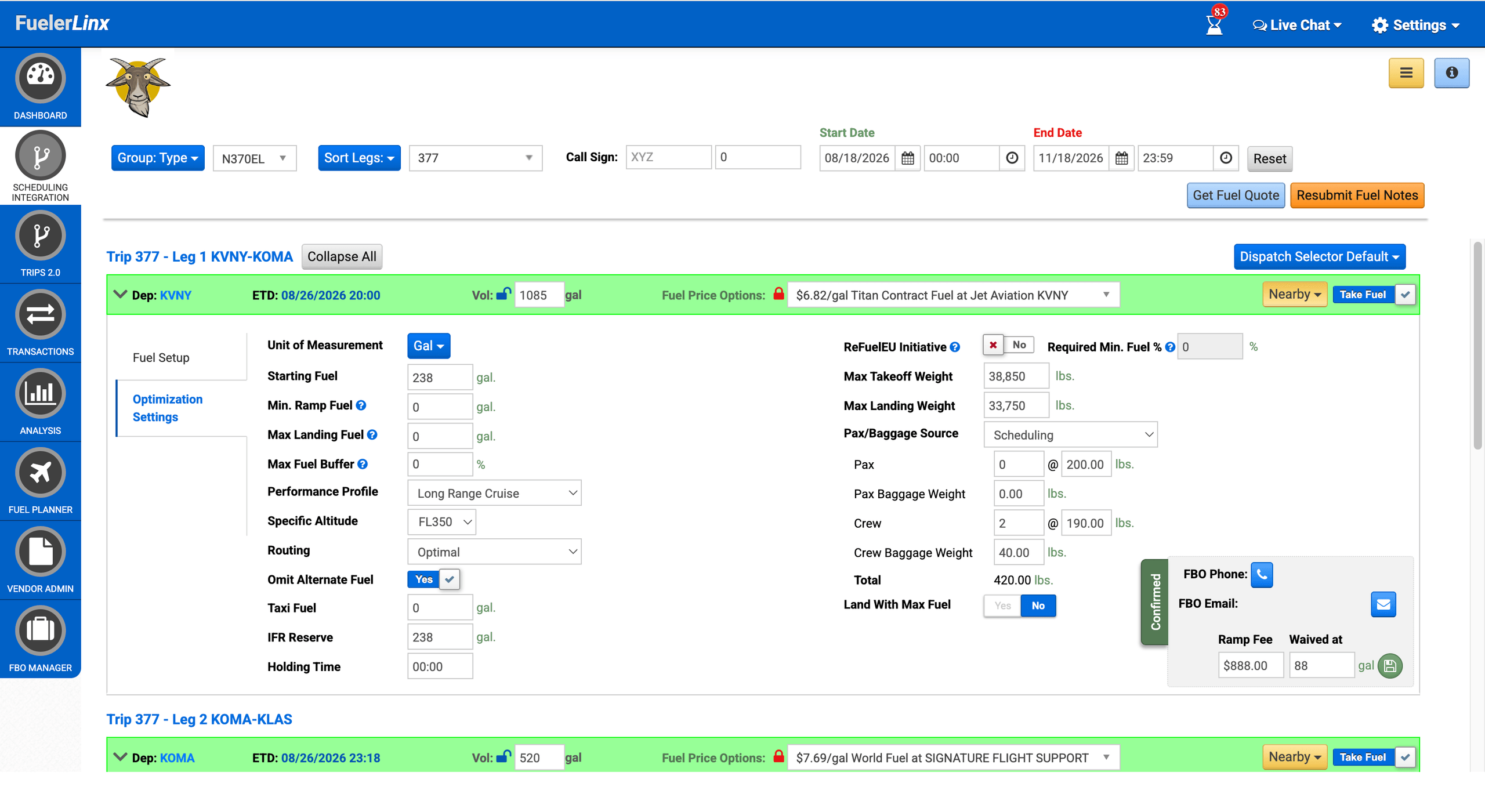
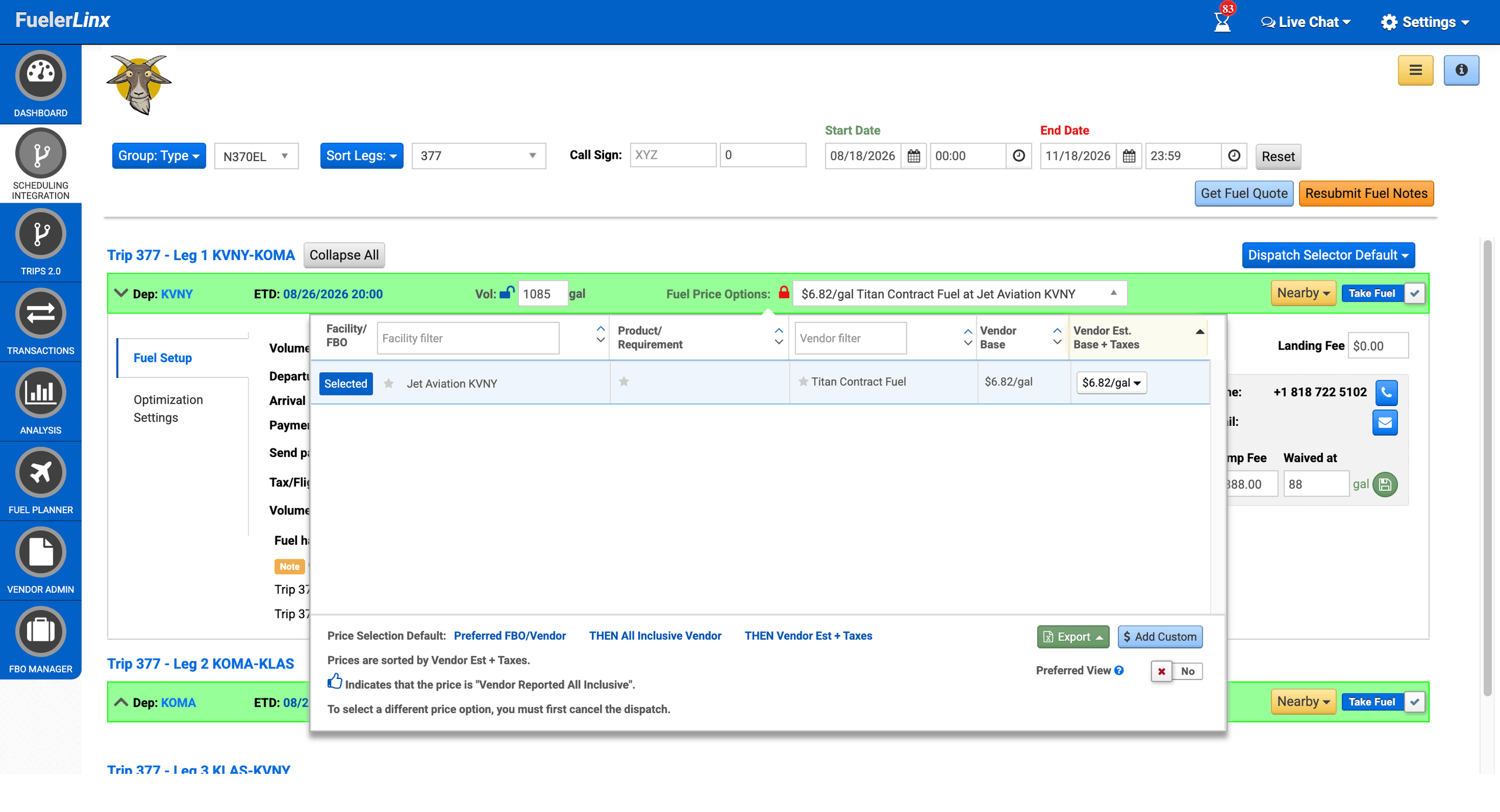
The legacy app
This is what dispatchers worked in before Trips 2.0.
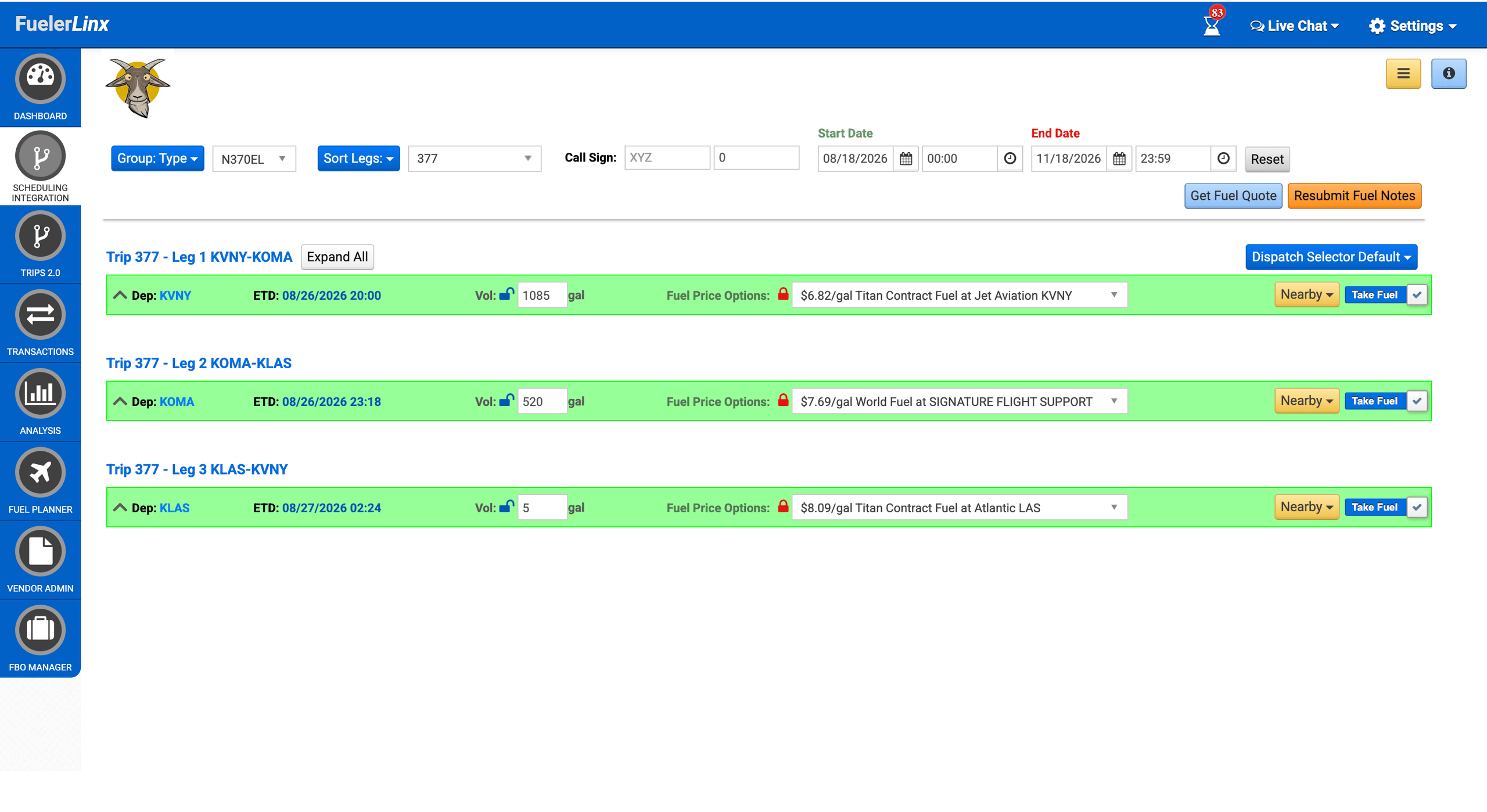
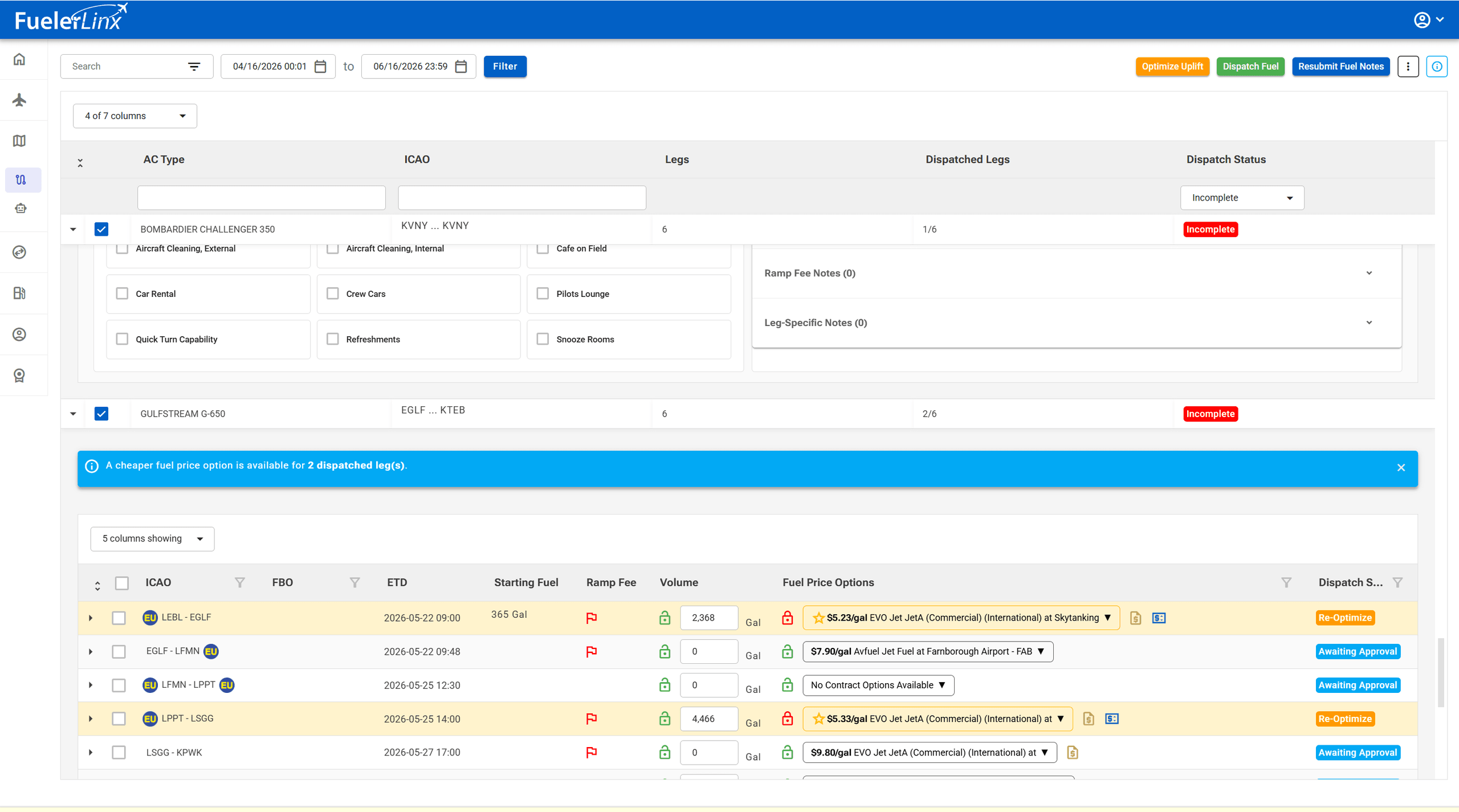
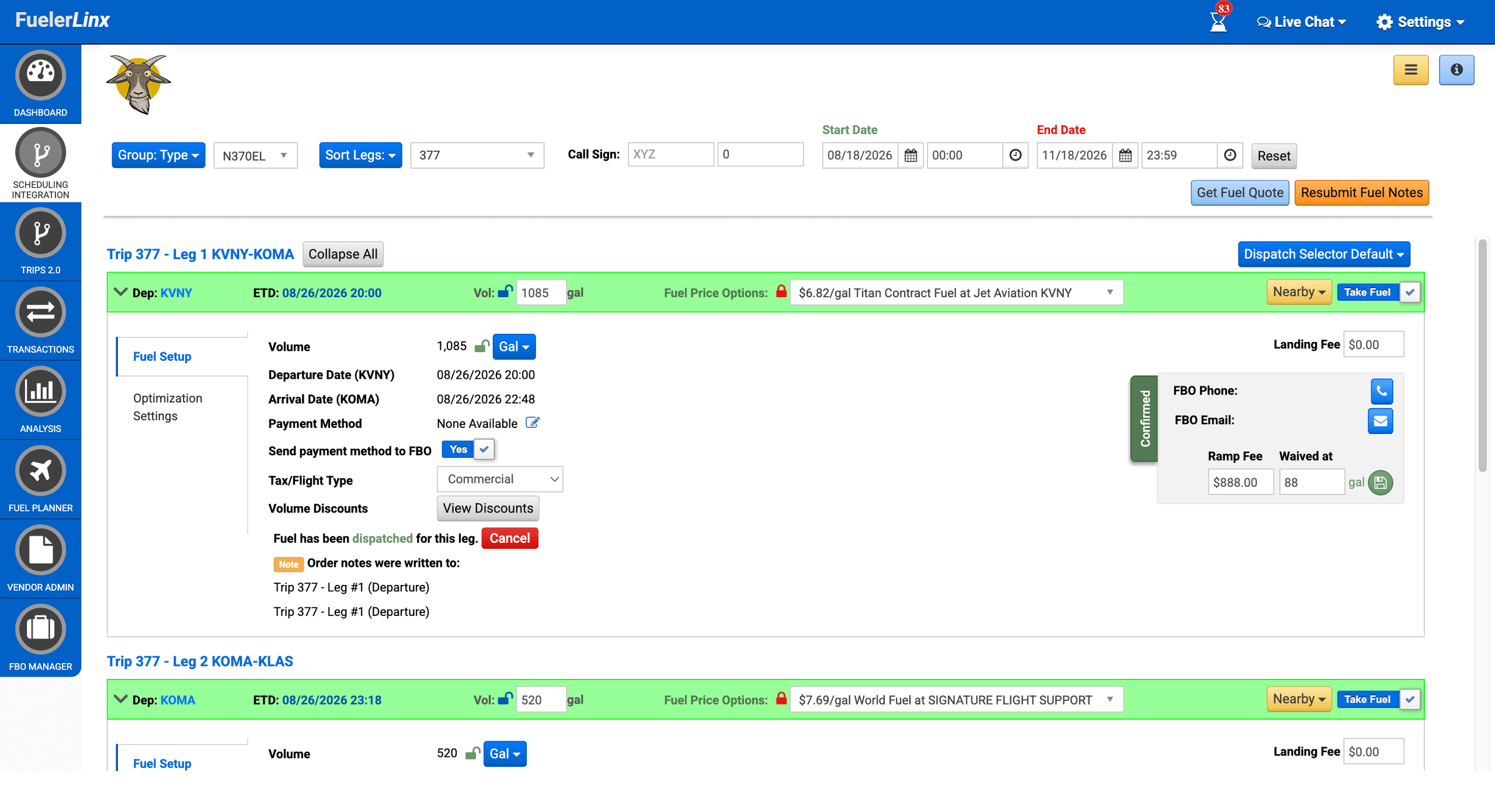
Three more screens, one level deeper each
Role
I was the only UX person on the product, so I owned the work end to end: discovery, information architecture, flows, Figma design, and the Razor and Radzen components that shipped.
Process
Discovery and field research
Before any screens, I did discovery and field research on how trips actually get dispatched.
Defining the shape of the dashboard
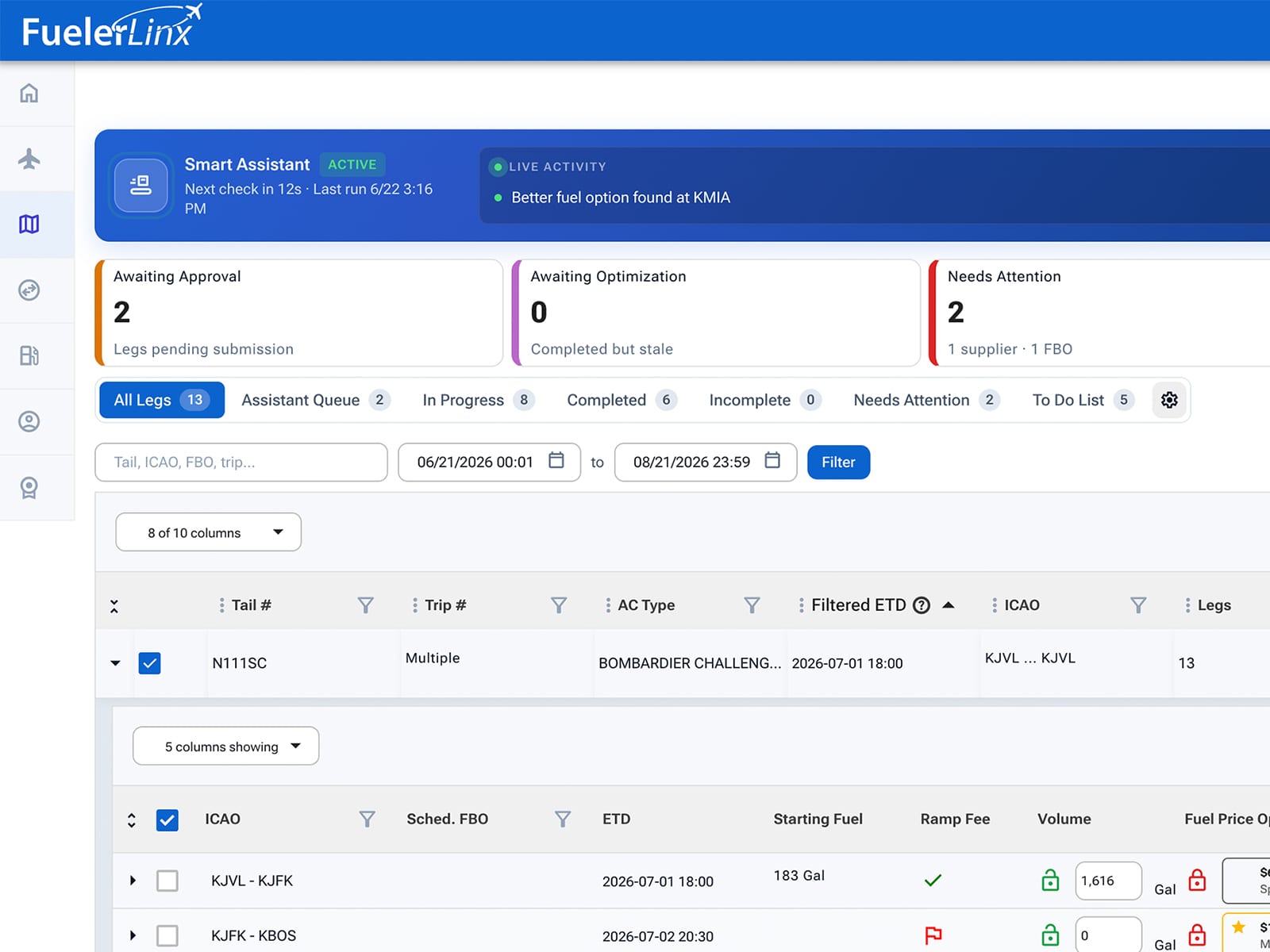
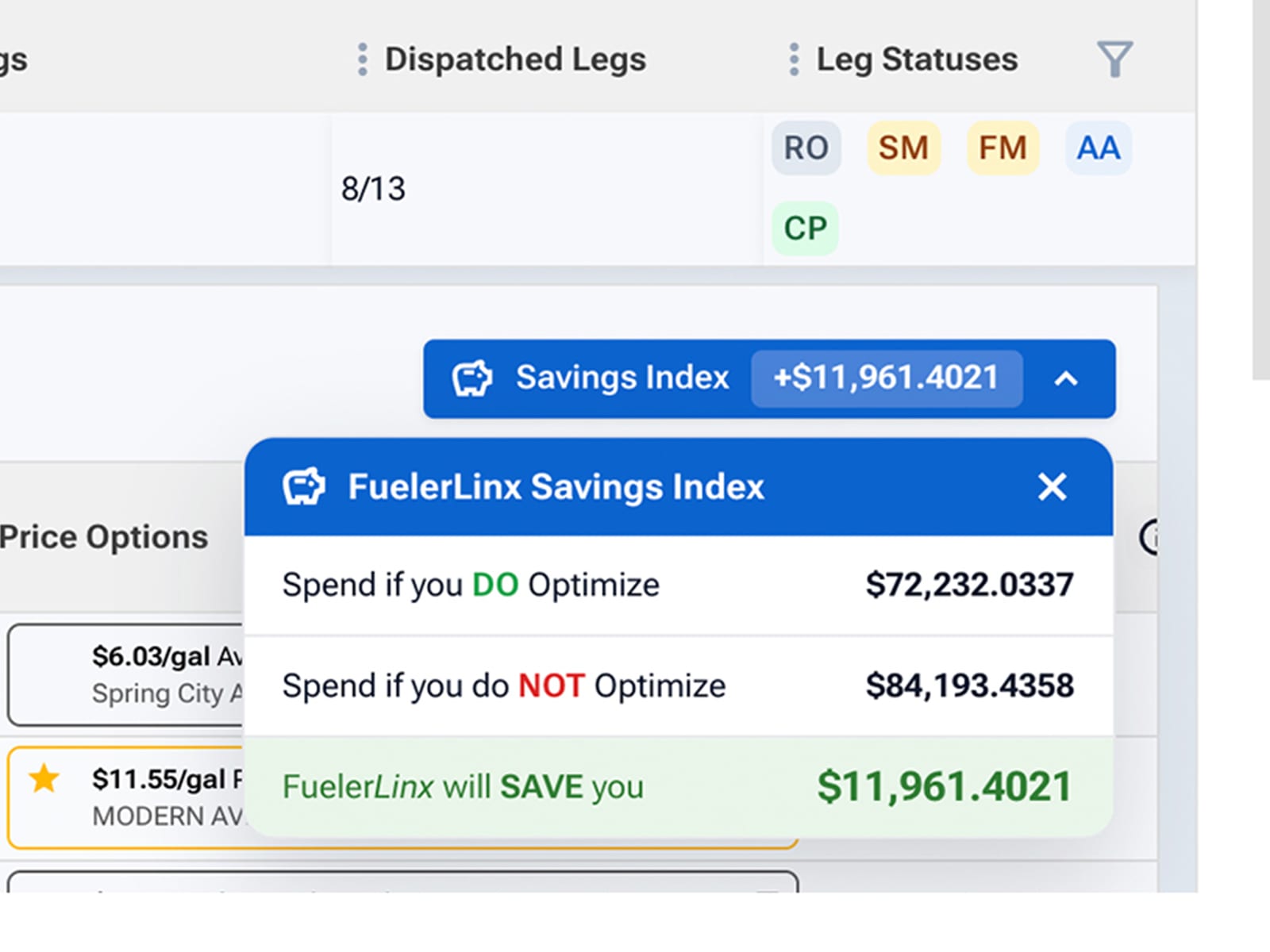
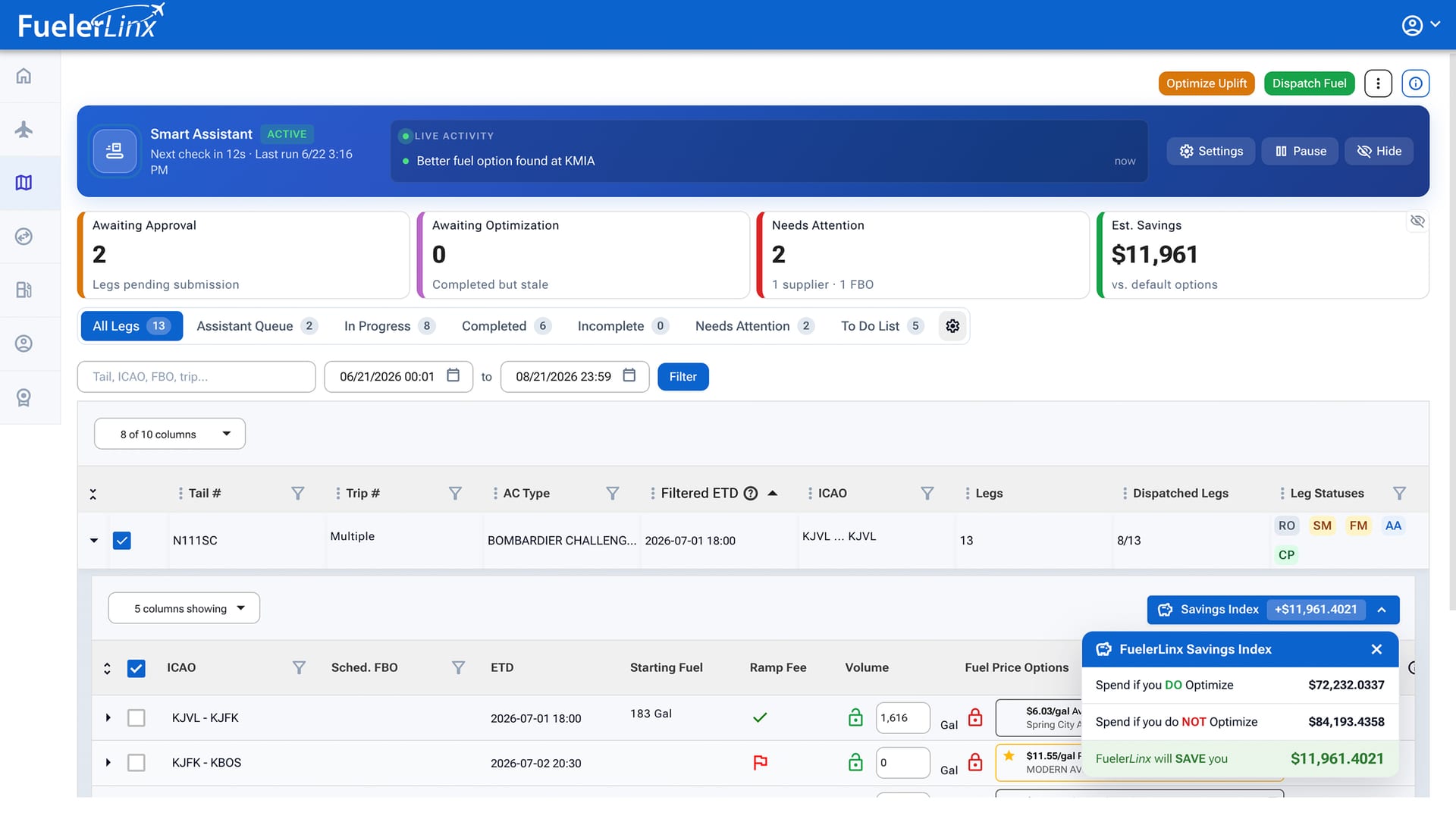
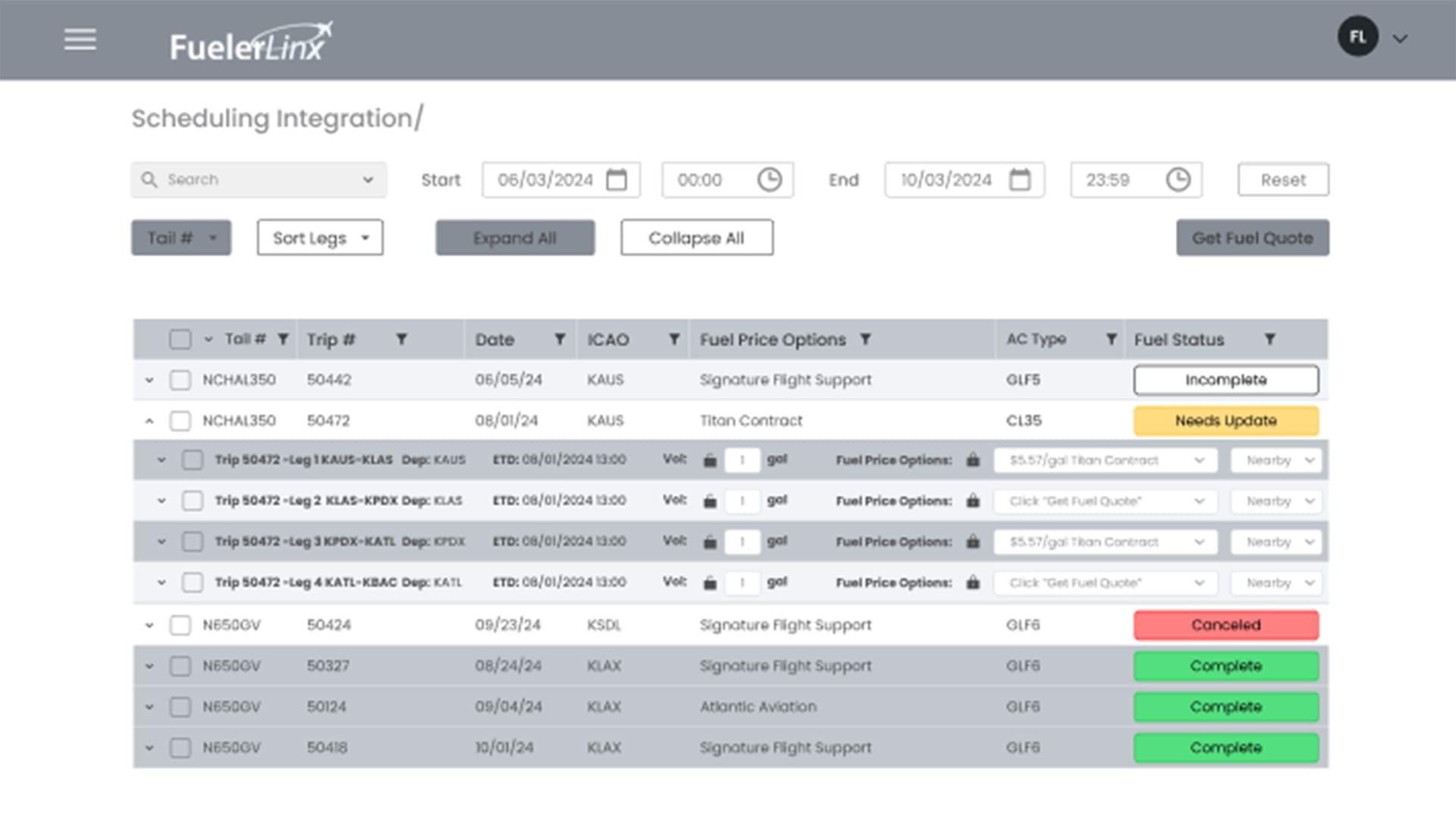
The finished product covers four jobs in one real-time view: trip dispatch, leg tracking, fuel optimization, and financial workflows.
Design
I designed in Figma with the shared component library, so the dashboard reused patterns from other modules instead of inventing new ones.
Build
I built the interface in the product's own stack, Razor with Radzen.Blazor components, instead of handing off a spec and hoping it survived.
Review
Solution
Trips 2.0 puts dispatch, leg tracking, fuel optimization, and financials in one dashboard that updates in real time.